
Part One
Think
 Falta Uno is for the guy who organizes the Thursday game…who pays?
Chapter 1
The Product
The first thing you need to know before you think through your app is something I wrote in 2019 and would sign twice today: an app is a product. A software product. And like any product, if you're not clear on who you're going to sell it to and why they'd buy it, it doesn't matter how well it's made.
In 2019 this mattered because making an app was expensive. If you got the product wrong, you lost months.
Today it matters even more, for the opposite reason.
The trouble with easy
When making an app took six months and several thousand dollars, there was a natural filter. Not many people made it to launch. Today anyone with a free afternoon and an AI can have something up and running. That's good news for you, because you're one of those "anyones." And it's bad news for the same reason: so is everybody else.
Your app isn't competing with the three or four similar ones in the store anymore. It's competing with every app that anyone who had the same idea on a Sunday afternoon is going to make. And if you had it, trust me, somebody else did too.
In the original book I used a word I picked up from Jürgen Klaric, from his book Véndele a la mente, no a la gente (roughly, Sell to the Mind, Not to the People): commodity. A commodity is a product that's no different from the others. Rice, wheat, oil. If all rice is the same, the cheapest one wins, end of story.
In 2019 I wrote that nothing was more commoditized than apps that do the same job. I undersold it. When AI can generate a booking app, a to-do app or a recipe app in minutes, those apps end up being worth the same as rice. In other words, next to nothing.
What AI can make in ten minutes is worth about ten minutes.
So what is worth something?
The hamburger story
In the original book I told a story about Ray Kroc, the man who turned McDonald's into what it is. The story goes that back when he was giving advice to entrepreneurs, people would come to his office and talk about their product. How good it was, the ingredients, how different it was.
Kroc would let them talk and then ask: "Can you make a better hamburger than McDonald's?" Almost all of them said yes. Then came the second question: "So if your hamburger is better than mine, why am I a millionaire and you're not?"
The answer is that McDonald's was never in the hamburger business. It was in the system business: where the restaurant was, how long it took to get your food, that it was the same in every city, that your kid wanted to go for the toy.
Apps work the same way, and with AI even more so. Your code is the hamburger. AI makes great hamburgers, practically for free. The system is on you.
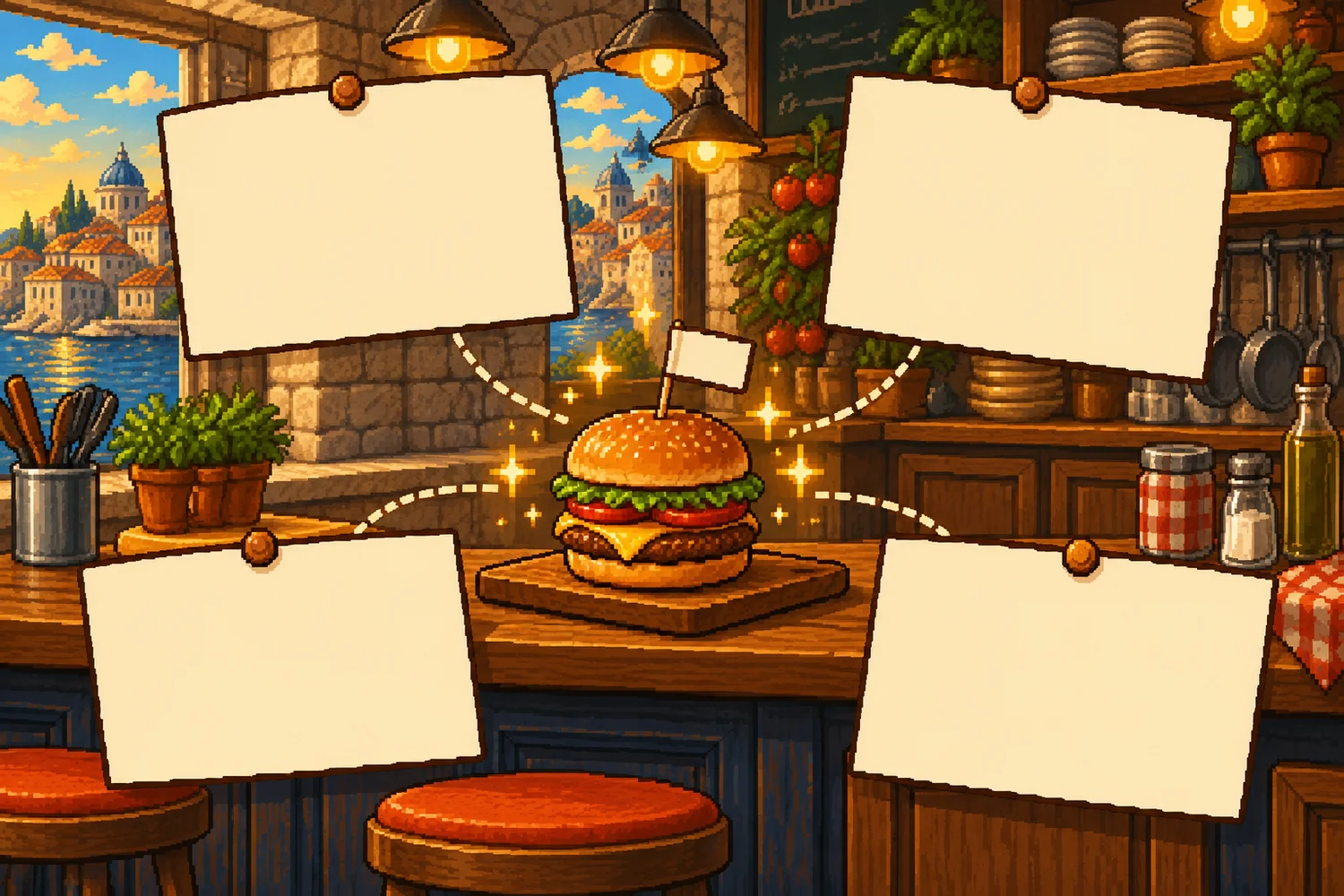 the code (AI does it)who you're solving something forwhat they do today instead of your apphow it makes moneywhy they come back
So what's the system of an app?
It's everything the AI can't guess by looking at your idea from the outside. I'll boil it down to four things, and we'll work through them one by one over the next few chapters.
Who you're solving something for. Not "young people" or "people who play soccer." One specific person, with a specific problem, at a specific moment. The narrower, the better. An app for everyone is an app for no one, and AI is trained to make apps for everyone.
What that person does today instead of using your app. This is your real competition. It's almost never another app. It's WhatsApp, a spreadsheet, a notebook, a phone call, or just putting up with the problem. If you can't beat that, you can't beat anything.
How your app makes money. Who pays, how much, when and why. And how much it costs you when someone uses it. That last part is new and we'll look at it closely, because if your app has AI inside, every user costs you money each time they tap certain buttons.
Why they come back. Getting someone to download your app is half the job. The other half is getting them to open it next week. In 2019 I called it loyalty. The name doesn't matter. What matters is that you think about it before you build, because it changes what you build.
First how it sells, then how it's made
In the original book I proposed flipping the order, and it's still the most useful thing I ever wrote. It used to be that you designed a product and then figured out how to sell it. The smart move is the reverse: lay out the idea, think about how it's going to sell and to whom, and only with that information in hand design the product.
With AI this order becomes close to mandatory, for a practical reason. AI builds incredibly fast in whatever direction you point it. If the direction is wrong, you get to the wrong place incredibly fast. And a built app is much harder to turn around than an idea on paper. Not because changing the code is expensive (the AI changes it in no time), but because by then you've fallen in love with what you saw on the screen and you don't want to let it go.
The example we'll use
Meet Falta Uno. In Spanish it means "one's missing," the thing you say when you're one player short.
Every Thursday, somewhere, somebody organizes a five-a-side soccer game. Let's call him Nico. Nico has a WhatsApp group with fourteen people in it. On Monday he asks who's playing. On Tuesday he calls three venues until he finds a field that's free at nine. By Wednesday nine people have confirmed. On Thursday at seven in the evening one of them bails because his knee hurts, and Nico spends an hour sending messages trying to find a tenth. Sometimes he finds one. Sometimes they play four against five. Sometimes the game gets called off and they have to argue about who pays the deposit.
That's the problem. Falta Uno is the app that solves it. Or rather, the app we're going to think through together so it solves it.
Notice I still haven't said anything about screens, or buttons, or colors. I said who, what problem and at what moment. That's the product. The rest comes later.
Your homework for this chapter
Grab a sheet of paper and write your app's working name at the top. Don't waste time on the name, you'll change it later.
Below that, answer each of these in one line:
- Who's the person with the problem? Give them a name, an age and something they do on Thursdays.
- What's the problem, told the way they'd tell it over a beer?
- What do they do today to deal with it?
- Why isn't what they do today enough?
If any answer came out with words like "optimize," "manage" or "experience," cross it out and write it again the way Nico would say it. Nico doesn't manage anything. Nico spends an hour sending messages.